
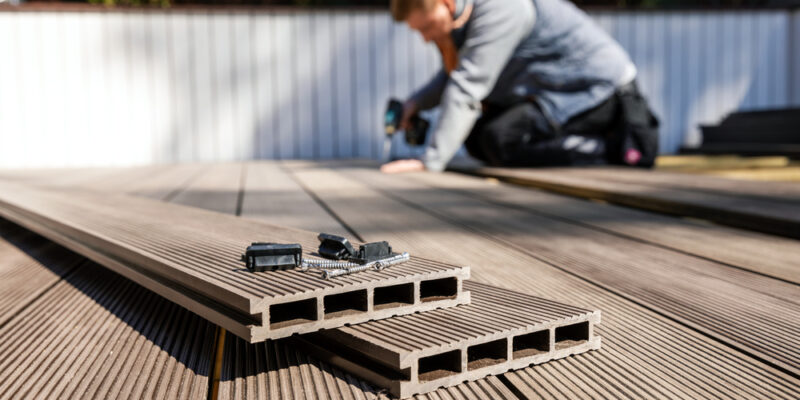
Composite decking offers pros like low maintenance and high durability. This material resists rot, stains, and insect damage. Key cons include a higher upfront cost compared to traditional wood. Additionally, composite surfaces can become hot in direct sunlight and may be susceptible to scratches, scuffs, and permanent staining.
So you’re standing at a crossroads for your backyard project. On one path, there’s traditional wood, it’s classic, it’s what we know, but man, that yearly staining ritual is a real chore. On the other path, there’s composite decking. It gleams with the promise of a maintenance-free life, but you can’t shake the feeling that there has to be a catch.
There is. Several, in fact.
The choice isn’t just about wood vs. plastic. It’s a complex decision that pits upfront cost against long-term labor, aesthetics against practicality, and environmental ideals against manufacturing realities. Let’s break down what this stuff actually is and whether it lives up to the hype.
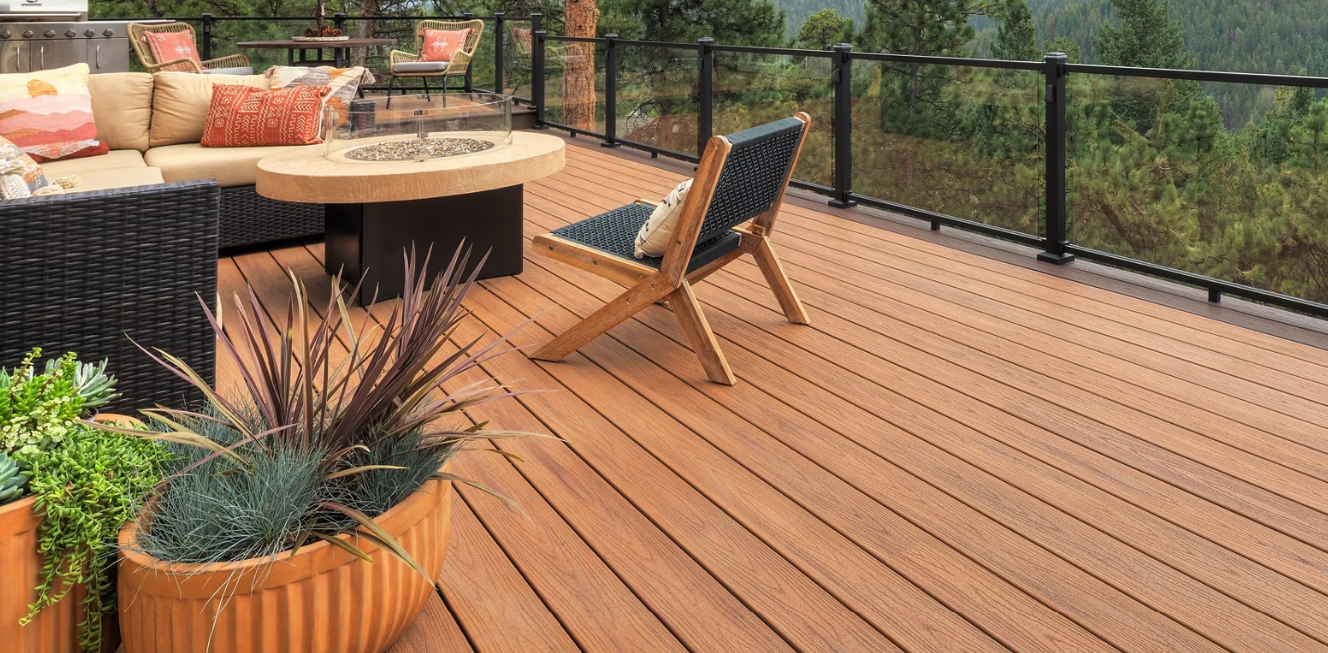
What Are We Actually Talking About? A Look at the Material Science
At its core, composite decking is an engineered product born from a pretty simple idea: take the stuff we don’t want (sawdust, wood chips, plastic bags, milk jugs) and fuse it into something we do want. Fundamentally, it’s a blend of wood fibers and plastic, cooked together under intense heat and pressure with bonding agents. The resulting board is dense, heavy, and a whole different beast from a piece of lumber.
But here’s the first critical distinction: not all composites are created equal. The ratio of wood to plastic is everything. A board with too high a wood-fiber content might look more natural, but it can also be more susceptible to moisture absorption over time—the very thing it’s designed to prevent. A board with too much plastic can look, well, plasticky, and might have issues with thermal expansion that you need to account for during installation.
The real evolution in this space came down to one major problem with the early stuff:
- First-Generation (Uncapped) Composites: These are the original formula. The wood and plastic are mixed all the way through, meaning the wood fibers are exposed on the surface. They were a good first step, but they were porous. They could still stain from a spilled glass of wine and were known to sometimes harbor mold or mildew in shady, damp corners.
- Modern (Capped) Composites: This is where the industry got smart. Manufacturers took that composite core and “capped” it with a protective shell made of pure plastic, almost like the coating on a golf ball. This outer layer is non-porous and provides serious resistance to staining, fading from UV exposure, and scratching. Today, capped composites are pretty much the industry standard for any quality installation, though the quality and thickness of that cap… that’s a major differentiator between a budget brand and a premium one.
The Good Stuff: Why People Pay the Premium (The Pros)
The reasons people fork over the extra cash for composite are compelling, and they usually boil down to solving the biggest headaches of wood deck ownership.
It’s Just… Tougher.
This is the “built-like-a-tank” argument. The materials science here is sound. By encapsulating the wood fibers in a plastic matrix, you’re basically creating a shield against the elements. Water can’t get in to fuel rot and fungal growth. This is what stops the classic wood-deck failure cycle of warping, cracking, and splintering before it even starts. It’s also completely unappetizing to termites and other wood-boring insects. This isn’t just a minor benefit; it’s a fundamental shift in longevity. That’s why you see warranties stretching from 25 to 50 years, something unheard of for traditional timber.
The Maintenance Schedule is a Ghost
This is arguably the number one reason people make the switch. Forget the annual pilgrimage to the hardware store for stain, sealer, brushes, and sanding pads. Forget losing a weekend every spring to back-breaking labor. That’s all gone.
A composite deck’s maintenance routine is ridiculously simple:
- No yearly sealing or staining. Ever.
- The color is either baked in or protected by that cap, so it resists fading.
- It cleans up with soap and water.
- No splinters. A huge plus for kids and pets.
The value proposition is clear: you’re trading a higher upfront cost for decades of your own time and money back. You spend more time using the deck, less time working on it.
The Reality Check: Understanding the Downsides (The Cons)
Of course, there’s no magic material. Composite decking comes with its own set of trade-offs, and it’s crucial to go in with your eyes open.
The Upfront Cost Can Be a Gut Punch
Let’s not sugarcoat it: the initial sticker shock is real. Depending on the brand and quality you choose, composite materials can easily be 25% to 75% more expensive than standard pressure-treated pine. For a large, complex deck, that can add up to thousands of dollars.
The key, however, is to think in terms of Total Cost of Ownership. Yes, you pay more on day one. But when you factor in the cost of stain/sealer ($200-$500 per year), cleaning chemicals, and replacement boards for a wood deck over, say, 20 years… the math starts to look very different. In many cases, the composite deck actually becomes the cheaper option over its full lifespan. The question is whether your budget can handle the initial hit.
Physical and Aesthetic Quirks
No matter how good the technology gets, composite doesn’t feel exactly like wood. Some people will always prefer the unique grain and organic feel of real timber. Cheaper composites can have a repetitive, obviously fake grain pattern or a plastic-like sheen.
And then there’s the heat. This is a big one. Dark-colored composite boards can get brutally hot in direct sunlight. (Seriously, try walking barefoot on a dark brown composite deck in the Australian outback or Adelaide in February, it’s a non-starter). Lighter colors are much better, but it’s a critical design consideration.
Finally, while it’s scratch-resistant, it’s not scratch-proof. Dragging heavy, sharp-edged patio furniture or a stray piece of gravel under a chair leg can leave a mark. Unlike wood, you can’t just sand out a deep scratch. It’s there to stay.
A Head-to-Head Breakdown: Composite vs. Wood
When you lay it all out, the decision becomes a balancing act of priorities. There’s no single “best” answer, only what’s best for you.
Maintenance: Composite wins, hands down. It’s a sweep and hose-down job versus an annual refinishing project. Wood is a long-term commitment.
Durability: Again, composite has the edge. It’s engineered to resist the things that kill wood: rot, insects, and moisture. That said, a properly maintained hardwood deck (like Ipe) can last a very long time, but it takes work.
Cost: Wood is the clear winner on upfront cost. Composite wins on long-term cost of ownership. It’s an investment vs. expense calculation.
Looks & Feel: This is purely subjective. Wood has a natural, unique beauty that many find irreplaceable. High-end composites do an incredible job mimicking it, but for some, it’ll never be the real thing.
Heat: Wood, especially lighter-colored species, stays much cooler underfoot than most dark composites. This is a non-negotiable factor in hot climates.
Safety: Composite doesn’t splinter. Period. This is a huge safety advantage, especially with small children running around.
The “Green” Question: Is Composite Really Eco-Friendly?
This is a complicated one. The sales pitch is strong: composites are made from up to 95% recycled materials! You’re saving trees and diverting plastic from landfills. And that’s true.
However, the manufacturing process to turn plastic bags and sawdust into a deck board is far more energy-intensive than milling a log. And at the end of its very long life, composite decking is not biodegradable. It’s likely destined for a landfill, where it will sit for… well, a very long time. Wood, on the other hand, will naturally decompose. So you’re weighing the immediate benefit of using recycled content against the long-term realities of energy consumption and end-of-life disposal.
A Few Words on Installation: Don’t Treat It Like Wood
This is a classic rookie mistake. Composite boards expand and contract with temperature changes—way more than wood does. You have to leave precise expansion gaps, not just between boards but where they butt up against the house or each other. Fail to do this, and you’ll get ugly buckling and warping on the first hot day of summer.
A few other critical notes from the field:
- Joist Spacing is Gospel: The manufacturer will specify maximum joist spacing (often 16 inches on center, sometimes less). Don’t cheat this to save on lumber. Composites are more flexible than wood and will sag over time if not properly supported.
- Ventilation is a Must: You need adequate airflow under the deck to prevent moisture buildup. Low-to-the-ground decks without proper ventilation are a recipe for trouble.
- Use the Right Fasteners: Most systems are designed for hidden clips that fit into grooved boards. This looks clean and automatically sets the side-to-side gap. Face-screwing is possible but can create little pockets for water and isn’t as aesthetically pleasing.
- Protect Your Substructure: Use joist protection tape. Your composite boards will last 30+ years, but the pressure-treated wood frame underneath them is still vulnerable. A cheap roll of flashing tape on top of the joists can add decades to the life of your deck’s foundation.
So, What’s the Verdict?
The choice to go with composite decking comes down to a simple trade-off: you’re exchanging a higher initial financial investment for a future with dramatically less work.
If you despise yearly maintenance, value extreme durability, and can budget for the upfront cost, a quality capped composite deck is one of the best investments you can make for your home.
If, however, you’re on a tighter budget, genuinely love the authentic look and feel of real wood, and don’t mind the annual ritual of upkeep, then a traditional wood deck remains a fantastic and timeless choice.
Ultimately, you need to be honest about your budget, your climate, and just how much you really want to spend your future weekends enjoying your deck versus sanding it.
Typical Questions
Read these common questions.
Okay, but does it really look like wood? Or will my deck look like a big plastic tray?
The honest answer is: it depends entirely on how much you spend. The cheap, entry-level composite boards can look pretty artificial. But the high-end product lines from brands like Trex, TimberTech, and Fiberon are genuinely stunning. They use multi-tonal streaking and deep, embossed grain patterns that are incredibly convincing, even up close. The texture isn’t identical, but visually, it’s often hard to tell the difference from a few feet away.
I live in a really hot, sunny climate like Australia. Is the heat issue a deal-breaker?
It can be if you’re not careful. The key cons for hot climates are heat retention and UV exposure. If you go with a dark color like walnut or charcoal grey, the surface can become too hot for bare feet during peak sun. The solution is to stick with lighter colors, think tans, light greys, or seashell tones. They reflect more sunlight and stay significantly cooler. Also, make sure you’re buying a quality capped composite, as the cap contains UV inhibitors that are essential for preventing fading in harsh sun.
What’s the real story on maintenance? Is it truly “zero maintenance”?
No, it’s “low-maintenance.” Zero-maintenance is a myth. You still have to clean it. Pollen, leaves, and dirt will build up, and if left in a damp, shady spot, can lead to surface mold or mildew (which is growing on the gunk, not the deck itself). A simple wash-down with soap and water once or twice a year is usually all it takes. The point is you’re cleaning, not refinishing. A crucial difference. And whatever you do, don’t hit it with a high-pressure power washer; you can damage the cap and void the warranty.