
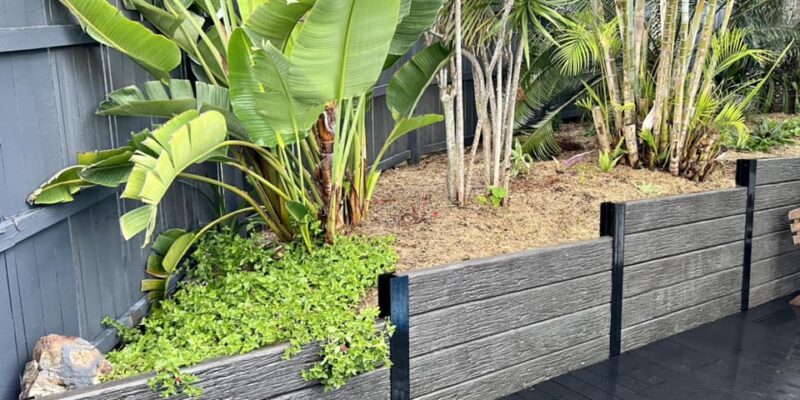
In Adelaide, you need approval for a retaining wall over one metre high. Approval is also required for walls of any height supporting a building, driveway, or other structure. Walls under one metre that do not support significant loads generally do not need approval. Always confirm specific rules with your local council.
It’s the classic question. The simple answer you’ll get is: “if it’s over a metre high, yes.” But in practice, that’s just the starting point. The reality is a lot more nuanced, and relying solely on that one-metre rule can get you into hot water with your local council pretty quickly.
A better way to think about it is that you need approval for any retaining wall that’s considered a significant structure. A wall over a metre high is automatically in that category. But a 900mm wall holding back the tonnes of soil under your driveway? That’s also a significant structure. The regulations are fundamentally about risk, not just height.
First, Let’s Get the Terminology Right: “Development Approval”
When people say “council approval” in South Australia, what they’re actually talking about is a formal process called Development Approval. It’s not just one rubber stamp; it’s usually two consents rolled into one application.
- Planning Consent: This is the council looking at the big picture. They’re asking, “How does this structure affect the neighbourhood, the streetscape, and your neighbours?” They’re concerned with things like visual impact, stormwater runoff, and whether you’re building it right on the boundary.
- Building Rules Consent: This is the nuts and bolts. It’s a technical assessment against the National Construction Code (NCC). Essentially, it’s a check to make sure the wall is designed properly, won’t fall over, and is structurally sound. This is where the engineers get involved.
For most retaining walls that trigger the need for approval, you’re going to need both. This is generally done via PlanSA.
The Key Triggers: When the Council’s Interest is Piqued
So, how do you know if your project is going to require a formal application? It boils down to a few key factors that flag your wall as being more than a simple garden bed.
Wall Height is the big one. That one-metre threshold is the clearest line in the sand. Why one metre? It’s not an arbitrary number. It’s the point where the physics get serious. The mass of retained earth and the potential hydrostatic pressure (water pushing from behind the soil) increase exponentially from there. The risk of a failure becomes significant, protecting you and your neighbours becomes paramount. A wall over this height is no longer considered minor work.
Surcharge Loading… this is the one that catches people out. A surcharge is any extra weight sitting on the soil behind the wall. Think about it:
- A driveway. Cars are heavy, and that load pushes down and outwards.
- The foundations of a shed or even a house.
- A steep slope rising up behind the wall.
- Even just another retaining wall sitting above it in a tiered design.
If your wall is supporting any of these, its height is almost irrelevant. You need an engineer to do the calculations, which means you definitely need council approval to verify it’s been done right. Failure to account for surcharge loads is a classic cause of wall collapses.
Proximity to a Boundary. Building on or very near a boundary line opens up a whole different can of worms, involving both council rules and separate legal obligations to your neighbour. Any ambiguity over that boundary line can lead to serious disputes. This is why you’ll often need a licensed surveyor to officially peg the boundary before you even think about design. Council approval in these cases acts as a formal record of the wall’s location, which can be invaluable down the track.
Significant Cut and Fill. If your project involves excavating (cutting) or bringing in soil (filling) deeper than about 600mm, this can also trigger the need for Planning Consent, as it’s seen as a significant change to the landform.
The Formal Approval Process, Step-by-Step
Navigating the system isn’t as daunting as it sounds, but you have to be methodical. It’s all managed through the state-wide PlanSA portal.
Step 1: Do Your Homework First. Before you even call a contractor, get onto your local council’s website and the PlanSA portal. Use their online tools to look up your property. Are there any specific overlays or rules for your zone? (Pro-tip: doing this early can save you a world of headaches). This is where you confirm the height, identify any surcharges, and get a feel for the scope.
Step 2: Engage the Professionals. If you’ve tripped any of the triggers, over 1m, surcharge, boundary issues, your next call is to a structural engineer. They’re non-negotiable. They’ll provide the certified designs, soil reports if needed, and the structural adequacy forms that council requires. If it’s a boundary wall, this is also when you’d get a surveyor involved.
Step 3: Lodge the Application. Your engineer or building designer will typically help you pull together the package for the PlanSA portal. This isn’t just one form; it’s a collection of documents: site plans, the engineer’s structural drawings and computations, forms, and so on. Incomplete applications are the number one cause of delays.
Step 4: The Back-and-Forth. A council planner and a building certifier (either council or private) will assess the application. It’s common for them to come back with a “Request for Further Information” (RFI). Responding to this quickly and completely is critical to keeping things moving.
What’s This Going to Cost Me?
The construction cost, timber vs. concrete sleepers vs. stone, is one thing. But the approval process itself adds another layer of costs you need to budget for. Expect to pay for:
- Engineering Fees: This can be anywhere from several hundred to a few thousand dollars, depending on the wall’s complexity.
- Surveyor Fees: If needed for a boundary survey, this is another professional cost.
- Council & PlanSA Fees: There are fixed fees for lodging the application.
- Private Certifier Fees: Often used for the Building Rules Consent part, this is another professional service fee.
The Neighbour Situation: Don’t Skip the Formal Notice
If your wall is anywhere near the boundary, talking to your neighbour isn’t just polite; it’s a legal necessity. The Fences Act 1975 (which often applies to retaining walls that serve as a boundary) and common law principles dictate a formal process.
You can’t just send a text. You generally need to serve them a formal written notice, sometimes called a Form 1 Notice, at least 30 days before you plan to start. This notice has to be specific: what you’re building, where exactly it’s going, what it’s made of, and the proposed costs.
This 30-day period gives them a chance to review it and respond. They can agree, they can disagree, or they can issue a counter-proposal. If you can’t agree, the next step is usually mediation, and if that fails, the Magistrates Court.
What happens if you just build it without notice? You’re taking a massive risk. Your neighbour could get a court injunction to stop the work or even an order to have the wall removed. This is entirely separate from any trouble you might be in with the council for not getting development approval. Don’t skip this step.
Common FAQs
Below are common questions that are asked about this.
So, what’s the absolute maximum height for a retaining wall in Adelaide before I need council approval?
The hard line is one metre, measured from the lowest point of natural ground. But remember, this is only if it’s a simple wall with no other complications. The moment it’s supporting a driveway or sitting on a boundary, the height becomes a secondary issue, and you’re almost certainly in approval territory.
How much does the approval process itself add to the final cost?
It varies, but you need to budget for it. Between engineer’s designs, potential surveyor costs, and council application fees, it can easily add a couple of thousand dollars or more to the project before a single shovel hits the dirt. It’s a significant, but necessary, part of the budget for any major retaining wall.
Apart from the 1m height rule, when is getting an engineer mandatory for council approval?
An engineer is mandatory anytime the wall is over one metre, OR when it’s supporting a surcharge load (like a building, car park, or another wall), OR if it’s a complex design on a tricky site (like highly reactive soil or a very steep slope). Essentially, if the wall is doing anything more than just holding back a bit of garden, an engineer’s certification is what the council needs to see for Building Rules Consent.