
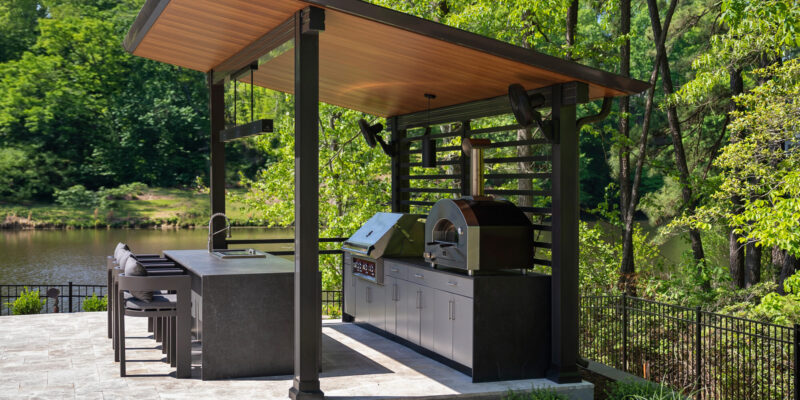
You’ve made the investment in an outdoor kitchen. The core idea is to stop it from turning into a science experiment in premature decay. The strategy isn’t just one thing, it’s a multi-layered defense system. We’re talking about a combination of overhead structures, smart material science, and targeted, component-level protection. You can’t just pick one.
Fundamentally, you’re fighting constant moisture and UV radiation. Everything else stems from that.
Overhead Coverage: The First Line of Defense
The single most effective shield for an entire outdoor kitchen is, without a doubt, a roof. But what kind of roof? The choice here really depends on your budget, climate, and how you plan to use the space.
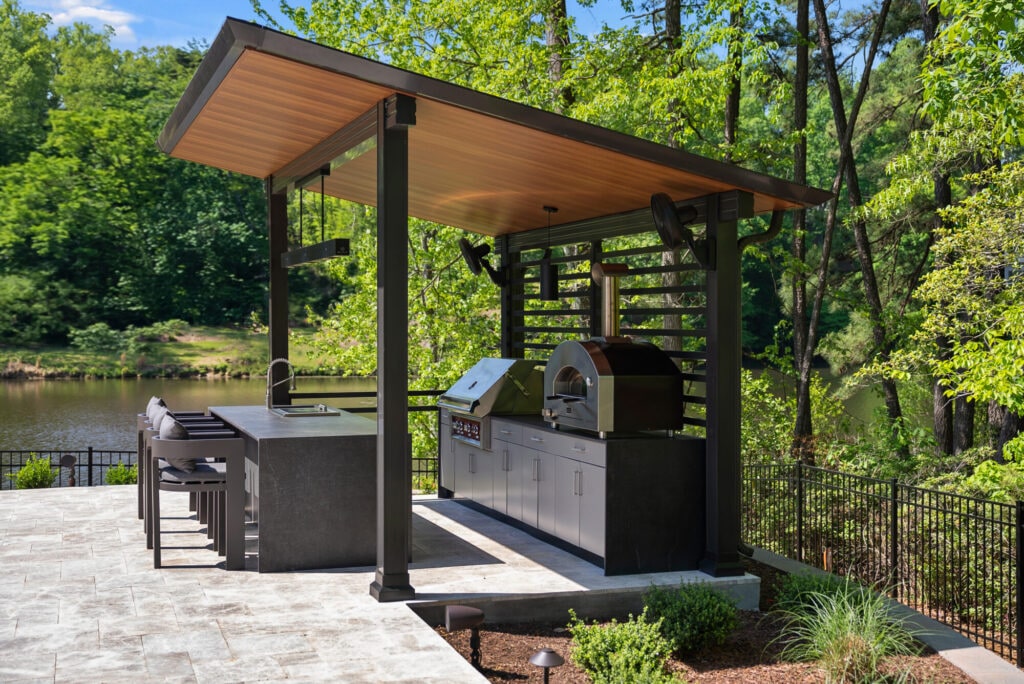
Image source: https://danver.com/blog/design-an-outdoor-kitchen-with-an-island/
The Fortress Approach: Pavilions and Solid Roofs
For absolute, no-compromises protection, a permanent, solid roof structure is the way to go. Think of a pavilion or a direct extension of your home’s roofline. This creates a genuine outdoor room, and what’s interesting here is that it protects not just the equipment, but the people using it, dramatically extending the usability of the space.
This approach offers:
- Total weather immunity. Heavy rain, snow, hail… it doesn’t matter. The kitchen stays dry.
- A shield against UV degradation. This is a bigger deal than most people realize. The sun will absolutely destroy the finish on cabinets, appliances, and even stone over time. A solid roof stops that cold.
- The ability to safely integrate utilities. You can run proper electrical for lighting, outlets, and ceiling fans without worrying about water intrusion, which is a major safety and code consideration.
A Balance of Shelter and Sky: The Modern Pergola
Pergolas are a fantastic middle ground. On their own, they just define a space, but when you add a cover, they become a serious protective element. We’re not talking about simple lattice anymore.
- Louvered Roof Systems: These are the gold standard for flexibility. Motorized louvers can seal completely watertight during a downpour or be angled to provide precise shade. The key thing to understand is that the motorization adds a mechanical point of failure, so you need to invest in a quality system with a good warranty.
- Polycarbonate Panels: Fitting clear or tinted panels over a pergola’s rafters blocks 100% of the rain while still letting in that valuable natural light. This is a great way to maintain an open feel.
- Fixed Fabric Canopies… though these are less common now with the advent of better systems.
On-Demand Protection: Awnings & Umbrellas
For those who want protection that can disappear, a retractable awning is a solid choice. These work best for shielding against harsh sun and light-to-moderate rain. Anything more, and you’ll need to retract it. A critical feature on modern motorized units is the wind sensor. This will automatically retract the awning in high winds, preventing it from turning into a very expensive kite. This is a non-negotiable feature in most installations.
Material Science: The Unseen Shield
What your kitchen is actually made of is just as important as what covers it. Beyond the roof, your material choices are your primary defense against the moisture that will inevitably get in.
Cabinetry: The Battle Against Swelling and Rot
Outdoor cabinets are constantly exposed to humidity. This is where material choice becomes critical to avoid the nightmare of delamination, corrosion, and rot.
- Marine-Grade Polymer (HDPE): Essentially, this is a high-density plastic that is completely inert to water. It will not swell, rot, or fall apart. Period. It’s the most foolproof material for outdoor cabinetry structures.
- 304-Grade Stainless Steel: The industry standard for a reason. It offers excellent rust and corrosion resistance. But let’s refine that: if you live in a coastal area with salt in the air, you should really step up to 316-grade stainless steel, which has added molybdenum for superior corrosion resistance against chlorides. This is a small detail that makes a massive difference in longevity.
- Powder-Coated Aluminum: Aluminum itself won’t rust, and the powder coating provides a tough, durable barrier against the elements and UV rays.
- Dense hardwoods like Teak or Ipe… these have natural oils that make them water-resistant, but they still require regular maintenance and sealing to look their best. They are a viable, if higher-maintenance, option.
Countertops: Repelling Water is Key
Your countertops need to handle everything from downpours to freeze-thaw cycles without cracking or staining. Porosity is the enemy.
- Granite: A workhorse, but only when sealed properly with an impregnating sealer. Re-sealing is a maintenance task you must not skip (annually in high-sun areas).
- Soapstone: A fantastic choice because it’s naturally non-porous. It doesn’t need sealing and is highly resistant to stains and heat.
- Concrete: Offers a great industrial aesthetic but is porous by nature. The quality of the sealant job is everything here. A poor seal will lead to stains and potential freeze-thaw spalling.
- Quartzite: Not to be confused with quartz (which is an engineered product not always rated for outdoor UV exposure), quartzite is a natural stone that’s even harder than granite. It’s an excellent, durable, though often pricey, option.
Protecting the Core Components
The Grill: More Than Just Stainless Steel
The grill is the heart of the kitchen and often contains electronics, igniters, and gas valves that hate water. A heavy-duty, fitted, waterproof cover is the simplest and most effective barrier when the grill isn’t in use. Make sure it’s breathable to prevent trapping condensation underneath, which can cause its own set of problems. If your grill is built into a structure, an insulated grill jacket is a critical safety component to prevent heat transfer to combustible materials. This isn’t optional; it’s often required by code.
Water Management: Drainage and Sink Integrity
Standing water is the enemy.
Proper drainage is an upfront design consideration, not an afterthought. Countertops should be installed with a very subtle slope, something like 1/8 inch per foot, to direct water away from appliances and towards an edge or sink. It’s barely perceptible but makes a huge difference.
For sinks, an undermount installation is technically superior in an outdoor setting. There’s no lip for water and gunk to get trapped under. All penetrations for faucets and the sink itself must be meticulously sealed with a high-quality marine-grade sealant (polyurethane or 100% silicone) to stop water from getting into the cabinet base below. And if you’re in a cold climate… a winterization protocol with easy-to-access shutoff valves and drain points for the plumbing is absolutely essential to prevent pipes from bursting.
A Practical Comparison of Protection Strategies
Trying to figure out where to put your money? This table breaks it down. The reality is that a combination of these is usually the best approach. Relying on just one method leaves you vulnerable.
| Protection Method & Style | Key Materials | Protection Level (Rain/Sun) | Durability & Damage Mitigation | Functional Impact |
|---|---|---|---|---|
| Pavilion / Solid Roof Structure | Wood, Metal, Composite | Excellent: Total protection. Creates a true all-weather space. | High: Shields the entire investment from UV, rain, and debris. Drastically reduces wear on all components. | Defines a dedicated “room,” maximizing usability year-round. Allows for integrated lighting and fans. |
| Pergola with a Waterproof Top | Wood, Fiberglass, Aluminum w/ Polycarbonate or Louvered System | Good to Excellent: A solid or louvered cover provides full rain protection. | High: Protects the area directly beneath. The structure itself will need maintenance depending on its material. | Defines the kitchen space without the visual weight of a solid roof. Extends seasonal use significantly. |
| Retractable Awning | Aluminum Frame, Solution-Dyed Acrylic | Good (in specific conditions): Great for sun and light rain. Must be retracted in wind. | Moderate: The fabric is tough but is a wear item. Protects surfaces from immediate sun and light moisture. | Maximum flexibility. Provides protection when needed, open sky when not. Preserves views. |
| Marine-Grade Polymer (HDPE) Cabinetry | High-Density Polyethylene | Material-Specific: The material is impervious to rain. Provides no overhead shelter. | Excellent: Will not rot, swell, or delaminate. Highly resistant to UV, stains, and heat. A build-it-and-forget-it core. | This is about asset preservation. Ensures the kitchen’s “bones” survive even if fully exposed to a hurricane. |
| 304/316-Grade Stainless Components | Stainless Steel | Material-Specific: The material tolerates rain. Offers no user comfort or shade. | High: Resists rust and corrosion. Prone to water spots, so requires cleaning to look good. | The industry standard for appliance durability. Ensures the expensive parts keep working. |
| Fitted Waterproof Covers | Heavy-Duty Vinyl, Polyester | Targeted: Excellent for individual appliances when not in use. | Good: A cheap and effective way to prevent water from getting into electronics and mechanisms. Protects finishes. | Requires manual effort. You have to be diligent about using them for them to work. |
Sources: Technical insights compiled from manufacturer specifications, building best practices from sources like This Old House, and outdoor design publications.
The Nitty-Gritty: What to Look For Before You Buy a Cover
When you’re evaluating any kind of cover, from an awning to a simple grill tarp, look past the marketing.
- Waterproof vs. Water-Resistant: These are not the same thing. For real protection, you need waterproof. Check for details like taped or welded seams. A double-stitched seam on its own will still leak without sealant.
- UV Resistance: Is the fabric solution-dyed? This means the color goes all the way through the fibers and will resist fading far longer than cheaper, surface-dyed fabrics.
- Breathability: For a fitted cover that sits directly on an appliance, it must be breathable. Trapped moisture from condensation will create a terrarium effect and can accelerate corrosion.
- Secure Fastenings: Look for robust straps, buckles, or a drawstring that can be cinched tight. The wind will find any weakness and exploit it.
Technical Document Revision: April 15, 2025. This document outlines key technical specifications and best practices for protecting outdoor kitchen assets from weather-related degradation.
Typically Asked Questions
Read our commonly asked questions.
How much does the initial design really affect an outdoor kitchen’s defense against rain?
Immensely. It’s probably the most critical factor. The layout itself can be designed to minimize exposure and promote drainage. Where you place the kitchen, leveraging existing walls for protection, for instance, and how you grade the patio slab underneath it are foundational decisions that will either make your life easier or create constant problems with pooling water. Getting the drainage plane right from the start is the best way to prevent long-term structural damage.
Besides using the right materials, what’s the best maintenance routine for durability against sun and rain?
Active maintenance is key. You can’t just build it and walk away. This means routinely cleaning surfaces to remove debris that can trap moisture and cause stains. It means re-applying sealants to stone countertops and grout lines annually. For any wood elements, it means cleaning and re-applying a protective UV-blocking finish. Think of it as preventative care; it defends against the slow, constant damage from UV and moisture cycles.
Can I actually get decent rain protection without building a permanent roof?
Yes, absolutely, but you have to understand the limitations. A high-quality retractable awning or a large, stable cantilever umbrella can provide excellent protection for a specific area. They are perfect for shielding the cooking space during a summer shower. What they can’t do is protect the entire kitchen footprint from driving rain or withstand high winds. They are a fantastic, flexible solution for improving usability in moderate weather.