
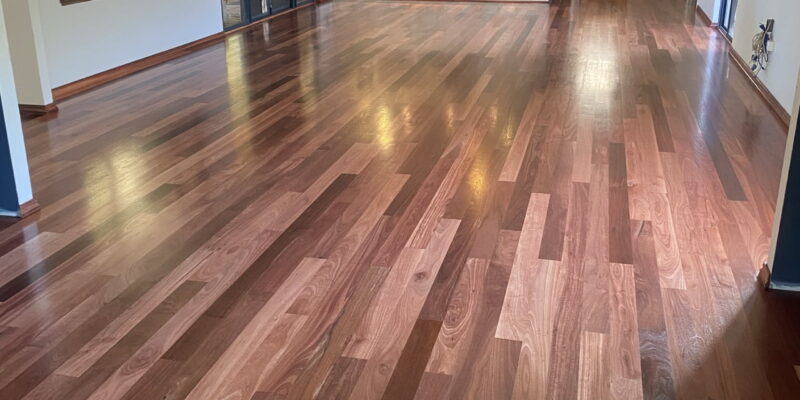
In Adelaide, the majority of homes pre-1970s had some form of timber flooring installed. Due to the cost and maintenance of caring for timber, many homes had carpet installed over the top. You will see houses in suburbs such as Unley, Tusmore and Rose Park, which had the borders of the rooms black Japan stained with floor rugs in the middle of the room.
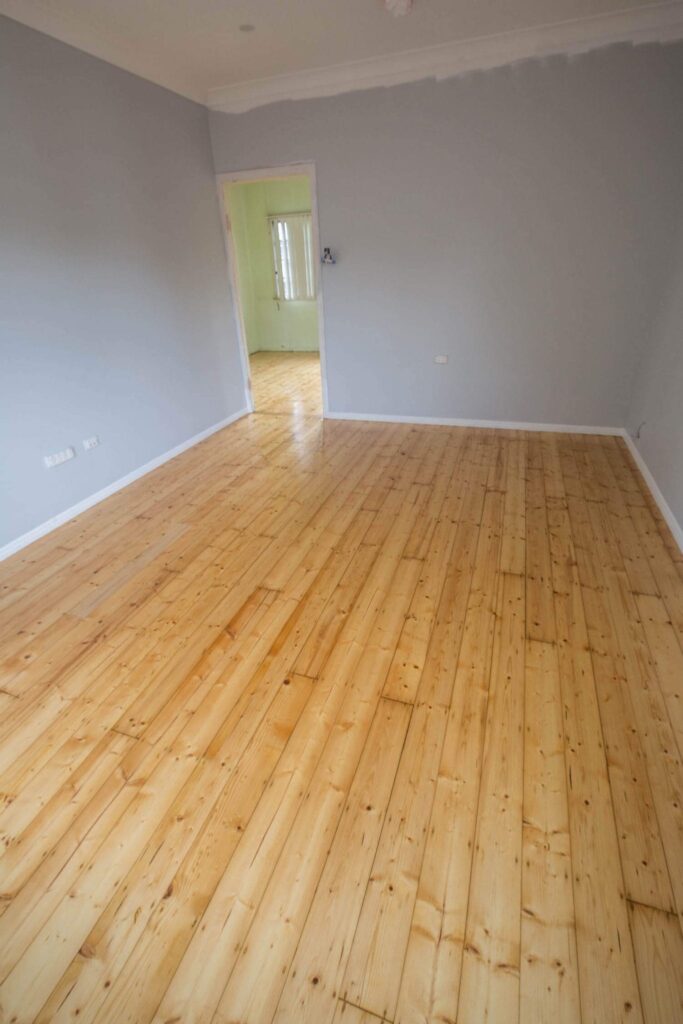
Common Timber Flooring
The most common species of timber used for flooring across Adelaide was pine. It was either Baltic pine or Cypress pine. Another was Rimu (this was imported from New Zealand and can be commonly found in Adelaide’s eastern suburbs such as Kensington, Hazelwood Park and Leabrook. This species of timber was used because of the hardness rating compared to pine.
Janka Hardness Test
To establish the hardness of timber, the Janka hardness test is used, and it measures the hardness of wood species. It involves measuring the force required to embed an 11.28mm (0.444in) steel ball into wood to half its diameter.
This method was chosen so that the result would leave an indention 100mm² (0.16sqin) in size. It is one of the best measures of the ability of a wood species to withstand denting and wear over time. The higher the Janka Rating, the harder the timber is, as shown in the table below:
| Species | Janka Scale (kN) |
| Bamboo (strand woven) | 16.1 |
| Grey Box | 15.0 |
| Ironbark | 14.0 |
| Red Mahogany | 12.0 |
| Turpentine | 12.0 |
| Spotted Gum | 11.0 |
| Brush Box | 9.5 |
| Blackbutt | 9.1 |
| Forest Reds | 9.1 |
| Sydney Blue Gum | 9.0 |
| Karri | 9.0 |
| Tallowwood | 8.6 |
| Merbau | 8.6 |
| Jarrah | 8.5 |
| Stringybark | 8.1 |
| Australian Beech | 7.5 |
| Flooded / Rose Gum | 7.5 |
| Northern Beech | 7.5 |
| Messmate | 7.1 |
| Bamboo (vertical) | 6.6 |
| Cypress Pine | 6.1 |
| New England Oak | 6.1 |
| American Oak | 6.0 |
| Bamboo (horizontal) | 5.9 |
| Tasmanian Oak | 5.5 |
| Victorian Ash | 4.5 |
| Baltic Pine | 2.9 |
As you will see in the table above, Victorian Ash and Tasmanian Oak (Tassie Oak). These two species of timber have a very low hardness rating on the Janka scale and would not be well suited for external use where the likelihood of it getting treated harshly is high, and it would damage the wood easily. If we then look towards the top of the Janka scale chart, species of timber such as Grey Box and Spotted Gum rank high in the hardness scale and would be much more suitable for external decking and high-volume traffic areas such as sporting venues and hotels.
In our projects across Adelaide, we use a mix of recycled and new timbers. Sourcing recycled timber locally in South Australia can, at times, be challenging. On a project we are currently working on in Kingswood, we required 300 lineal metres of Baltic pine 130mm wide and 22mm thick boards. This all came from interstate in Victoria from a company called Melbourne Recycled Timber.
These timber floor boards were transported across the us in Adelaide and then dispatched to the project in Kingswood.
Installing Timber Flooring
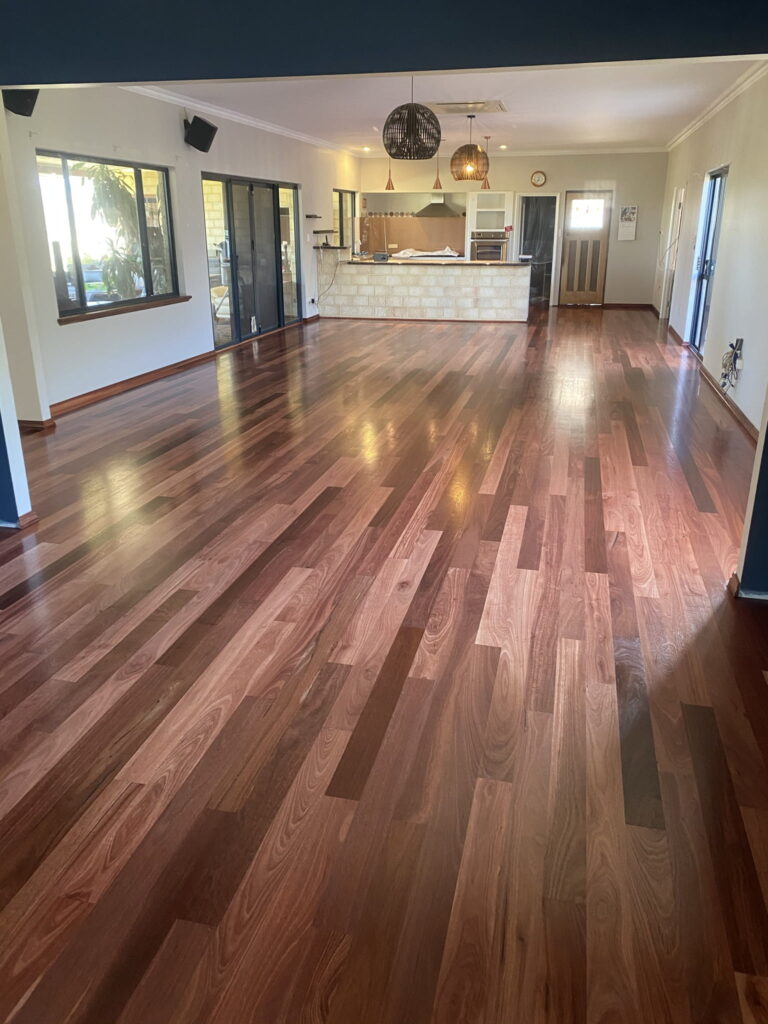
When matching existing timber flooring with recycled timber, we will use the original method of installation, which is nailing and puttying in the holes. But when we do a project which is all brand-new timber floor and battened off the floor, there is an option to use what we call a secret nail. The secret nail is installed between the tongue and groove location and concealed; this leaves only the timber on display, with no evidence of a nail or any other fixing visually seen.
Timber Floor Finishes
At the end of the timber installation, the boards are sanded and then polished. Today, the majority of our customers doing a home renovation opt for a satin finish and water-based. The benefit of the water-based product is that it doesn’t tend to amber as much over time, giving the floor the same colour for a longer period. Oil-based varnishes were known for their hardness and durability, but over time, technology has achieved the same result using water-based varnishes. Water-based varnishes have a faster cleanup period without the need for acetone and turpentine chemicals.
The satin finish still leaves the floor looking shiny, just not as highly shiny as a gloss finish. Another advantage of the satin finish is that it helps hide scratches and marks that may occur over time with general wear and tear.
Timber flooring has made a huge comeback since the late 90s in Adelaide and is still a popular choice for many of our clients in their renovations today. If you are thinking of renovating your timber floors call the team at Mayfair Building Group today.