

Concrete isn’t just one thing. It’s a whole family of materials, each one engineered for a very specific job. You’ve got your everyday stuff for sidewalks, and then you have the high-tech mixes that make skyscrapers possible. They all start with the same basic ingredients, but how you tweak the recipe changes everything. We’ll be looking at the standard mixes, the high-performance variants, specialty applications, and even the chemicals that give concrete its superpowers.
Think of this as a walkthrough, from the ground up. We’ll cover:
- The basic DNA of any concrete mix.
- A look at the main players: normal, high-strength, lightweight…
- Diving into the really specialized stuff engineered for unique problems.
- The chemical admixtures, the secret sauce.
- Why you’d almost always opt for premix over mixing on site.
- A final word on picking the right tool for the job.
The Fundamentals: What’s Actually in a Concrete Mix?
Before we get into the wild world of shotcrete and polymer concretes, you have to understand the basics of the mix itself. A concrete mix design isn’t a recipe from a cookbook; it’s a materials science formula. Every single component is proportioned to hit specific targets for strength, how it behaves when wet (workability), and how it will survive for decades out in the real world. This is a balancing act between materials, the environment, and what the structure needs to do.
The Core Components
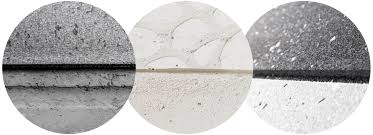
At its heart, every mix comes down to three things: a binder (cement), aggregates (rocks and sand), and water. The magic happens in how these three interact.
Cement: The Glue Portland cement is the standard. It’s a hydraulic cement, which just means it reacts with water to get hard. This reaction, called hydration, creates a paste that coats all the aggregates. As it hardens, it locks everything together into that familiar stone-like mass. The specific type of Portland cement you use (like a Type I for general use or a Type III for getting strong fast) is a huge lever in the mix design that controls setting timefinis and how quickly you build strength.
Aggregates: The Skeleton The aggregates, sand and gravel, make up the bulk of the mix, usually around 60% to 75% of the volume. They’re not just cheap filler; they are the structural backbone.
- Fine Aggregate: This is your sand (particles up to 4.75mm). It’s critical for filling the tiny gaps between the bigger rocks, which makes the mix denser and easier to work with.
- Coarse Aggregate: This is the gravel or crushed stone (anything bigger than 4.75mm). This forms the primary load-bearing skeleton of the concrete.
The Water-Cement Ratio: The God Parameter The water-to-cement (w/c) ratio is probably the single most important number in any mix design. It’s literally the weight of the water divided by the weight of the cement. A lower w/c ratio almost always means stronger, more durable concrete because it creates fewer pores in the hardened paste. But here’s the trade-off: less water makes the fresh concrete stiff and incredibly difficult to place and finish. This is the central problem that admixtures were invented to solve.
The Point of Mix Design
The goal is simple: hit the project specs as cheaply as possible. That means dialing in the proportions to nail two main targets. First is compressive strength (what everyone thinks of), typically measured after 28 days of curing. The other, equally important target is workability, often checked with a slump test. The mix has to be fluid enough to get into the forms and around rebar without the heavy aggregates separating and settling at the bottom.
Beyond that, you’re designing for a service life. Will it be exposed to freezing and thawing? De-icing salts? Sulfates in the soil? All these factors dictate your choice of cement, w/c ratio, and whether you need special admixtures to protect the concrete from attack.
The Main Classifications of Concrete
Concrete types are generally bucketed by their strength, density, or how they’re used. Getting these main categories straight is the first step in material selection. Below is a quick cheat sheet, but we’ll dig into what these numbers and ingredients actually mean in practice.
| Concrete Type | Typical Compressive Strength (MPa) | Key Differentiating Ingredients | Common Applications |
|---|---|---|---|
| Normal Strength | 20 – 40 | Standard Portland cement, sand, coarse aggregate | Pavements, general building construction, residential foundations |
| High-Strength | 60 – 120+ | Silica fume, superplasticizers, specific aggregate grading | High-rise buildings, long-span bridges, shear walls |
| Lightweight | 3.5 – 40 | Lightweight aggregates (pumice, expanded shale, scoria) | Long-span bridge decks, precast elements, insulating floors |
| Self-Compacting (SCC) | 30 – 60 | High-range water reducers (superplasticizers) | Heavily reinforced structures, complex architectural forms |
| Pervious / Porous | 2.8 – 28 | Minimal to no fine aggregate (sand), creating voids | Parking lots, sidewalks, stormwater management systems |
| Shotcrete | 20 – 50 | Accelerating admixtures, fine aggregates | Tunnel linings, slope stabilization, swimming pool shells |
| Polymer Concrete | 70 – 140 | Polymer resin binder (epoxy, polyester) instead of cement | Industrial flooring, concrete repair, precast utility components |
Data compiled from ACI and other material science publications.
Normal Strength Concrete
This is your workhorse. It’s the backbone of the construction industry, used for everything from foundations to sidewalks. It’s a no-frills mix of cement, sand, and aggregate, designed to balance cost, strength (usually 20-40 MPa), and workability. Its density sits around 2,400 kg/m³. It’s versatile, but it has its limits. For anything that needs to be exceptionally strong, lightweight, or stand up to harsh environments, you need to upgrade.
High-Strength Concrete (HSC)
Once you push past 60 MPa, you’re in the realm of high-strength concrete. This stuff is what allows us to build supertall skyscrapers with reasonably sized columns on the lower floors. The key to getting this strength is a very low w/c ratio (think below 0.35). To keep it from being unworkably stiff, you have to use powerful admixtures called superplasticizers. On top of that, materials like silica fume are added. Silica fume particles are microscopic, and they pack into the tiny voids within the cement paste, creating an incredibly dense and impermeable microstructure. This not only boosts strength but also makes it highly resistant to chemical attack, a huge benefit for things like bridge decks exposed to de-icing salts.
High-Performance Concrete (HPC)
Now, people often use “high-strength” and “high-performance” interchangeably, but there’s a critical difference. All high-strength concrete is high-performance, but not all high-performance concrete is necessarily high-strength. HPC is engineered for a specific performance goal that might not be raw strength. The defining characteristic is usually durability. For an HPC mix, the focus is on creating an almost impermeable material to maximize the structure’s service life. We’re talking low permeability, high resistance to chemical attack, or maybe high early strength for fast-track construction. This is where supplementary cementitious materials (SCMs) like fly ash and slag become absolutely essential.
Lightweight Concrete
With a density often down in the 1,440 to 1,850 kg/m³ range, lightweight concrete achieves its weight reduction by swapping out normal rock and gravel for porous, lightweight aggregates like expanded shale, pumice, or scoria. This has a massive benefit: it reduces the dead load on a structure, which can mean smaller columns, beams, and foundations. It’s a game-changer for projects like adding new floors to an existing building or for long-span bridge decks where every kilogram counts. A side benefit of all those air pockets in the aggregate is excellent thermal and acoustic insulation.
Heavyweight (High-Density) Concrete
The complete opposite. Here, the goal isn’t strength but mass. With densities over 3,000 kg/m³, this concrete is used for radiation shielding. It’s made with extremely dense aggregates like barite or even iron shot. You’ll find it forming the walls of radiation therapy rooms in hospitals, nuclear power plants, and labs with particle accelerators.
Specialized Concrete for Modern Problems
Beyond the basics, there’s a whole suite of specialized concretes that solve unique engineering challenges. These are the result of some serious materials science, designed for flowability, permeability, or unique application methods.
Self-Compacting Concrete (SCC)
Also known as self-consolidating concrete, this is a brilliant piece of engineering. It’s an ultra-flowable mix that can fill complex formwork and wrap around dense reinforcement cages with zero mechanical vibration. It flows like a milkshake but doesn’t segregate. The magic is in its rheology, a careful balance of high powder content and advanced superplasticizers that give it low yield stress but high viscosity. The benefits are huge: faster construction, a beautiful surface finish right out of the form, and a safer job site without the deafening noise of vibrators. But be warned: the mix design is incredibly sensitive. A small change in water content or aggregate moisture can turn a perfect SCC mix into a segregated mess.
Pervious (Porous) Concrete
This is concrete designed to let water pass right through it. The trick? You leave out most or all of the sand. This creates a network of interconnected voids (typically 15-25% of the volume) that water can drain through. It’s a fantastic tool for stormwater management—used in parking lots and sidewalks, it allows rainwater to infiltrate the ground instead of overwhelming storm drains. It’s not for heavy-duty pavements, as the voids reduce its strength, and it requires maintenance. The pores can get clogged with dirt and debris, so they need to be periodically cleaned to keep them working.
Shotcrete (Sprayed Concrete)
Shotcrete is defined by its application method: it’s pneumatically sprayed at high velocity onto a surface. This allows you to place concrete on vertical or even overhead surfaces without forms. Think…
- Tunnel linings
- Slope stabilization, often with rock bolts and mesh
- Repairing damaged concrete surfaces
- Free-form structures, like artificial rocks or swimming pools.
It comes in two flavors: a dry-mix process where water is added at the nozzle (giving the nozzleman a lot of control) and a wet-mix process where it’s all mixed beforehand and pumped to the nozzle. Wet-mix generally gives you better consistency. To get it to stick overhead, shotcrete mixes often include accelerating admixtures that make it set almost instantly.
Polymer Concrete
Here, we throw out the Portland cement entirely and replace it with a polymer resin like epoxy or polyester as the binder. The aggregates are mixed with the resin, which then cures via a chemical reaction. The resulting material is a beast. It can have incredible compressive strength (>100 MPa), cures very quickly, and is almost completely resistant to chemical attack and water penetration. Its bond to old concrete is also phenomenal. This makes it an expensive but highly effective material for things like industrial flooring in chemical plants or critical structural repairs.
Precast and Prestressed Concrete
Precast simply means the concrete element (a beam, a wall panel, a pipe) was cast in a controlled factory setting and then shipped to the site. This factory control gives you a much higher and more consistent quality than you can ever achieve casting concrete in the field with variable weather.
Prestressed concrete is a type of precast where we introduce compressive stresses into the element before it ever sees a load. This is done to counteract the tensile stresses that will be applied when it’s in service (remember, concrete is terrible in tension).
- Pre-tensioning: Steel tendons are stretched in the casting bed, concrete is poured around them, and once the concrete hardens, the tendons are cut, transferring compression into the concrete.
- Post-tensioning: Ducts are cast into the concrete. Later, tendons are fed through, tensioned with jacks, and then anchored. This technology is what makes long, slender, and efficient bridge girders and floor slabs possible.
Fiber-Reinforced Concrete (FRC)
This is concrete with a bunch of small, discrete fibers mixed in. The point of the fibers isn’t really to increase the ultimate compressive strength. It’s all about controlling cracking and improving toughness. When a microcrack starts to form, a fiber will bridge the gap, transferring load and preventing the crack from growing. This makes the concrete far less brittle and able to absorb much more energy before failing. The fibers can be:
- Steel fibers for serious toughness in industrial floors or shotcrete.
- Glass fibers for lightweight architectural panels (GFRC).
- Synthetic fibers like polypropylene, mostly just to control plastic shrinkage cracks that form when the concrete is still fresh.
- Natural fibers are an area of ongoing research for sustainability.
Decorative Concrete
This is where concrete gets to be pretty.
- Stamped Concrete: Molds are pressed into fresh concrete to mimic the look of stone, brick, or wood.
- Stained and Polished Concrete: Acid stains react chemically with the concrete to create rich, variegated colors. Polishing involves grinding the surface smooth to a high gloss, often revealing the beauty of the aggregates inside.
The Secret Sauce: Types of Concrete Admixtures
Admixtures are the chemicals you add to the mix to tweak its properties. They are the tools that allow us to create all the high-performance and specialized concretes we’ve been talking about.
- Water-Reducers (Plasticizers): They let you get the same workability (slump) with less water. Less water means a lower w/c ratio, which means higher strength. Simple.
- High-Range Water Reducers (Superplasticizers): These are plasticizers on steroids, able to cut water content by up to 30%. They are non-negotiable for making high-strength concrete and are the key ingredient in self-compacting concrete.
- Accelerators: They speed up hydration, making the concrete set faster and gain strength earlier. Essential for cold-weather concreting or when you need to strip forms quickly.
- Retarders: The opposite of accelerators. They slow down hydration, giving you more time to place and finish the concrete. A lifesaver during hot weather or for massive, continuous pours where you need to avoid “cold joints.”
- Air-Entraining Admixtures: These create a network of microscopic, stable air bubbles in the concrete. When water in the pores freezes and expands, it can move into these tiny air pockets, relieving the pressure. This dramatically improves a concrete’s ability to survive freeze-thaw cycles.
- Corrosion-Inhibiting Admixtures: These chemicals are added to the mix to protect the steel rebar from corrosion, usually by forming a protective film on the steel’s surface. They are a crucial part of designing for long-term durability in corrosive environments.
The Logistics: Why Go with Premix Concrete?
Premix, or ready-mix concrete, is batched at a plant and delivered to your site in a truck. For any serious construction project, this is almost always the way to go versus mixing it yourself on-site. The reason comes down to one word: control.
A ready-mix plant is a factory. Everything is automated and computer-controlled. The moisture content of the aggregates is measured, materials are weighed precisely, and admixtures are dosed accurately. This gives you a level of consistency and quality from batch to batch that is practically impossible to replicate with manual, on-site mixing. It also simplifies site logistics immensely. You don’t have to store huge piles of sand, gravel, and cement, and you don’t need a crew of people dedicated to running a mixer. For large pours, it’s the only way to get the volume of concrete you need, when you need it. While it might seem more expensive upfront, the cost of inconsistent quality, material waste, and labor for site-batching almost never pencils out for professional work.
Final Word: Picking the Right Concrete
As you can see, the world of concrete is far more complex than just specifying a certain compressive strength. The selection process has to be a holistic evaluation of what the structure needs to do over its entire life. You have to consider the environment it will live in, the loads it will carry, how it will be built, and even what you want it to look like. From the simple utility of a normal strength sidewalk mix to the slender, durable columns of an HSC skyscraper, the optimal choice is always the one that is perfectly matched to the job at hand.
A Few Practical Questions
How does water resistance vary between these different types?
It varies dramatically. On one end, you have pervious concrete, which is designed to be a sieve. On the other end, you have materials like polymer concrete or a well-designed shotcrete mix, which are engineered to be virtually impermeable. These are your go-to options for things like swimming pools, tunnels, or marine structures where keeping water out is the entire point.
Which of these is the most sustainable option?
That’s a tricky question, but generally, any concrete that incorporates significant amounts of supplementary cementitious materials (SCMs) gets the nod. “Green concrete” often refers to mixes that replace a large portion of the Portland cement, the production of which is very CO2-intensive, with industrial byproducts like fly ash (from coal plants) or slag (from steel manufacturing). This not only cuts the carbon footprint but also reduces landfill waste.
For decorative work, what are the best bets?
If aesthetics are the main driver, stamped and stained concrete are probably the most popular choices. Stamped concrete gives you texture, letting you mimic expensive materials like slate or flagstone for a fraction of the cost. Staining, especially acid staining, can create incredibly rich, deep, and unique colors that look like natural stone. For a modern, industrial look, nothing beats polished concrete, which grinds the surface smooth and brings out the character of the aggregates.