
Updated: November 2026 | Australian data centre construction industry overview
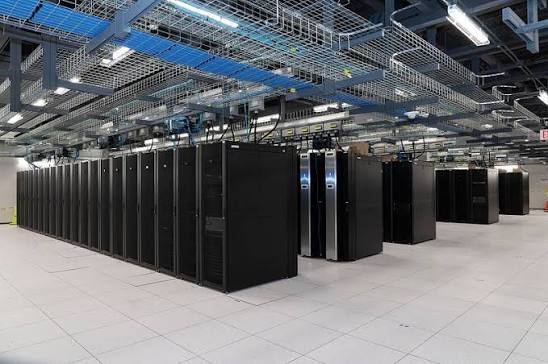
Australia’s data centre construction industry is expanding rapidly, with major projects being developed by NEXTDC, AirTrunk and CDC Data Centres, alongside significant infrastructure investments from Microsoft and Amazon Web Services (AWS).
But when people ask who is building Australia’s data centres, there are two different questions: who owns and develops these facilities, and which construction companies are actually building them?
Companies such as NEXTDC and AirTrunk typically develop and operate data centre infrastructure, while construction businesses including Multiplex, A W Edwards and Kapitol deliver major building works.
For construction contractors, subcontractors, suppliers and property owners, knowing the difference matters. An announced multibillion-dollar investment does not necessarily mean construction has commenced, a head contractor has been appointed or subcontracting opportunities are available.
Below, we examine confirmed Australian data centre projects, the contractors delivering them, how these facilities are constructed and what their development means for the Australian building industry.
Who Is Actually Building Australia’s Data Centres?
Several major construction companies have publicly documented experience delivering Australian data centres.
| Construction company | Confirmed project | Developer/operator | Documented involvement |
|---|---|---|---|
| Multiplex | S4 Sydney, Horsley Park, NSW | NEXTDC | Early contractor involvement and design-and-construct delivery |
| A W Edwards | SYD3, Western Sydney, NSW | AirTrunk | Expanded construction contract announced July 2026 |
| Kapitol | M3 Melbourne, West Footscray, VIC | NEXTDC | Construction delivery, prefabrication and systems coordination |
These are documented examples rather than an exhaustive list of Australian data centre builders. Other contractors may be involved across different projects, expansion stages and specialist packages.
The distinction is particularly important on hyperscale developments, where one campus may be delivered in multiple stages over several years.
A construction company appointed to deliver the initial building may not necessarily deliver every subsequent expansion.
1. Multiplex – Building NEXTDC’s S4 Sydney Data Centre
Multiplex is delivering NEXTDC’s S4 Sydney data centre at Horsley Park in Western Sydney.
According to Multiplex’s March 2026 construction announcement, the project is located at 16 Johnston Crescent, Horsley Park, and comprises two four-storey buildings designed by HDR and Greenbox Architects.
Multiplex identifies the development as a 350MW data centre project, scheduled for completion in mid-2027.
The contractor’s involvement began well before construction commenced. Multiplex provided early design advice from 2022, followed by formal Early Contractor Involvement (ECI) in 2024.
This allowed the builder to contribute to design development, construction planning and technical feasibility before the main delivery stage.
What makes this project significant?
The S4 project highlights how data centre construction differs from conventional commercial building work.
Multiplex’s published project information identifies several notable construction features:
- Extensive use of precast and modular construction elements.
- Large-capacity cranes to handle substantial building components.
- An on-site 330kV electrical substation.
- Two four-storey buildings incorporating complex technical infrastructure.
- Early coordination between construction, engineering and operational requirements.
In June 2026, Multiplex also reported installing exceptionally large luffing tower cranes to support construction.
Construction industry analysis: These details illustrate why early contractor involvement can be valuable on large data centre projects. Structural design, electrical infrastructure, equipment access and installation sequencing need to be coordinated before expensive specialist systems arrive on-site.
A decision affecting the building structure can also affect electrical distribution, cooling equipment, equipment replacement access and the construction program.
For subcontractors, that means a data centre project may require closer coordination between structural, mechanical and electrical teams than a conventional warehouse or office development.
Sources: Multiplex – S4 Sydney project and Multiplex – construction commencement, March 2026.
2. A W Edwards – Building AirTrunk’s SYD3 Expansion
A W Edwards, an Australian subsidiary of Bouygues Construction, is another confirmed builder involved in major Australian data centre development.
In July 2026, Bouygues Construction announced that A W Edwards had secured an expanded contract worth approximately €1.2 billion to continue delivery of AirTrunk’s SYD3 hyperscale campus in Western Sydney.
The broader SYD3 campus is designed for more than 400MW of capacity.
This is a significant confirmed construction appointment, rather than simply an announcement of future investment.
Why staged construction matters
Hyperscale data centres are often delivered progressively, with different buildings and technical systems completed as additional computing capacity is required.
That approach can create distinct procurement and construction opportunities.
For example, a campus expansion may involve:
- Additional structural and civil construction.
- New electrical distribution infrastructure.
- Cooling and mechanical plant installation.
- Data hall fit-outs.
- Fire protection and building management systems.
- Testing and commissioning of new infrastructure.
Not every package will necessarily be tendered separately. Contract structure, supplier prequalification and existing commercial relationships determine how work is allocated.
Construction industry analysis: An expanded construction contract provides stronger evidence of active delivery work than a general investment announcement.
However, it does not establish which individual subcontracting packages remain available. Businesses pursuing work must still investigate the appointed contractor’s procurement arrangements.
Source: Bouygues Construction – AirTrunk SYD3 expanded contract, July 2026.
3. Kapitol – NEXTDC Data Centre Construction in Melbourne
Kapitol has documented experience delivering data centre projects across Melbourne, including work associated with NEXTDC’s M1, M2 and M3 facilities.
Its NEXTDC M3 project in West Footscray provides a particularly useful example because the contractor has publicly documented construction methods, procurement challenges and technical delivery requirements.
The first stage of M3 was completed in September 2022.
Kapitol’s published project account describes a development including data halls, generators, cooling plant, electrical switch rooms and supporting infrastructure.
What the M3 project reveals about data centre construction
Kapitol identifies several construction methods used to manage the project’s complexity.
Prefabricated plant and equipment
Components including pump houses, chiller modules, generator modules and pipe sections were manufactured off-site.
This approach allowed equipment to be prepared before installation, with lifting arrangements and construction sequences coordinated in advance.
Structural design improvements
Kapitol describes changes to electrical switch-room construction that reduced work at height and improved construction efficiency.
The project also incorporated substantial precast structural elements.
Ongoing testing and commissioning
Testing was coordinated throughout delivery rather than left entirely until the end of construction.
This matters because data centre electrical, mechanical and control systems must operate together. Completing the building structure is not the same as demonstrating that the facility’s critical infrastructure is ready for operation.
What construction businesses can learn
The M3 case provides three practical lessons.
First, procurement planning can affect construction progress when major components have long manufacturing and delivery periods.
Second, prefabrication is not simply a way to reduce on-site labour. It requires careful design coordination, transport planning, lifting arrangements and quality control.
Third, testing and commissioning should influence the construction program from an early stage.
These lessons are drawn from Kapitol’s published project account, not from an independently conducted site inspection.
Source: Kapitol – NEXTDC M3 Data Centre Portfolio.
Which Companies Are Developing Australia’s Data Centres?
The companies commissioning Australian data centres are not always the businesses physically constructing them.
Understanding the principal developers and operators helps identify where construction demand originates.
NEXTDC
NEXTDC develops and operates data centres across Australia.
Its facilities include established sites, developments undergoing expansion and new projects at different planning and construction stages.
S4 Sydney is an example of an active development with a publicly identified construction contractor.
By contrast, NEXTDC’s A1 Adelaide facility officially opened in September 2024.
That distinction matters: A1 Adelaide represents completed infrastructure, not a future construction opportunity simply because it appears in a list of NEXTDC investments.
Source: NEXTDC – A1 Adelaide opening.
AirTrunk
AirTrunk develops and operates hyperscale data centre campuses designed for major computing requirements.
The SYD3 expansion demonstrates how the operator and head contractor can have separate responsibilities.
AirTrunk is the data centre business behind the campus, while A W Edwards has a documented construction delivery role.
The same operator may appoint different contractors across different campuses or construction stages.
CDC Data Centres
CDC develops and operates major data centre infrastructure in Australia and New Zealand.
In May 2026, CDC announced a 555MW customer contract, with capacity expected to become operational during FY2028 and FY2029.
This is an important indicator of future infrastructure demand, but it is not equivalent to an announcement that 555MW of capacity is already operational.
Nor does the customer contract identify the construction contractor for every associated development.
CDC did not publicly name the customer in that announcement, so identifying it as a particular technology company would be speculation.
Source: CDC – 555MW customer contract.
Are Microsoft and Amazon Building Data Centres in Australia?
Both Microsoft and Amazon are making major investments in Australian computing infrastructure.
However, investment figures need to be interpreted carefully.
Microsoft’s A$25 billion Australian investment
In April 2026, Microsoft announced plans to invest A$25 billion in Australian cloud and AI infrastructure by the end of 2029.
The company described this as capital and operational expenditure associated with expanding its computing infrastructure.
That expenditure should not be confused with the value of construction contracts.
Importantly, the NSW Government’s March 2026 list of projects progressing through its Investment Delivery Authority process included a Microsoft Datacenter (Australia) proposal at Honeman Close in the Blacktown local government area.
This provides a project-specific development reference.
It does not, by itself, establish that a head contractor has been appointed or construction has commenced.
Sources: Microsoft – Australian investment announcement and NSW Government – data centre development announcements.
Amazon Web Services’ A$20 billion investment
Amazon announced a planned A$20 billion investment between 2025 and 2029 to expand, operate and maintain its Australian data centre infrastructure.
The commitment includes infrastructure development and ongoing operational expenditure.
For construction suppliers, the headline figure indicates the scale of AWS’s infrastructure program, but it does not reveal the builder appointed to each project.
Identifying actual construction opportunities requires more detailed information about sites, project stages, contracting arrangements and procurement.
Source: Amazon – Australian data centre investment.
Why Data Centre Construction Is Different From a Normal Commercial Building
Although data centres may resemble large industrial buildings externally, their technical requirements make them substantially different from many conventional commercial developments.
The building shell is only one part of the project.
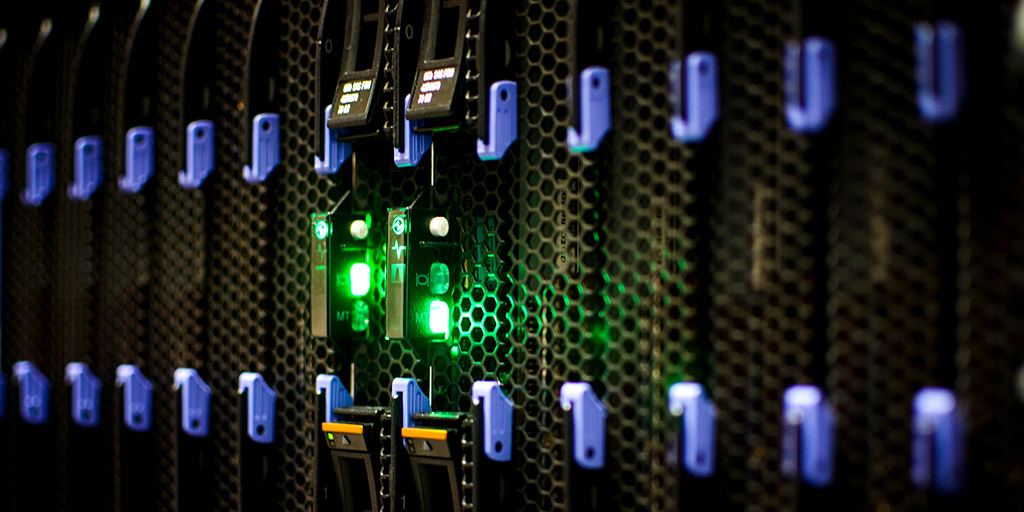
Data centres must accommodate extensive systems supporting computing equipment, including electrical distribution, backup power, cooling, controls and fire protection.
Electrical infrastructure
Large data centres can require substantial incoming electrical capacity, specialist switchgear, transformers, uninterruptible power supply systems and backup generation.
These systems require careful integration with the building layout, maintenance access and operational requirements.
Mechanical cooling
Computing equipment produces heat that must be removed to maintain operating conditions.
Depending on the facility’s design, cooling infrastructure may include chillers, air-handling equipment, pumps, pipework and heat-rejection systems.
Different cooling approaches also have different implications for energy consumption and water requirements.
Our guide to why data centres need water explains the relationship between data centre cooling systems and water use.
Structural and equipment installation requirements
Generators, chillers, transformers and other large components can create significant structural, access and lifting requirements.
Kapitol’s M3 example illustrates how prefabrication and installation planning can influence construction methods.
Multiplex’s S4 project similarly demonstrates the importance of planning for unusually large construction components.
Testing and commissioning
A completed building is not necessarily an operational data centre.
Electrical, mechanical and control systems must be tested to demonstrate that they operate as intended, both individually and together.
Commissioning requirements can have a substantial influence on construction sequencing and project handover.
Noise and neighbouring properties
Cooling equipment, ventilation systems and backup generators can also create noise considerations.
For surrounding properties, the most relevant evidence is generally the project-specific acoustic assessment and the conditions applying to its development.
Our guide to whether data centres are noisy discusses common operational noise sources.
Where Are Australia’s New Data Centres Being Built?
Sydney and Melbourne remain important centres for major data centre construction, although development also extends to other Australian locations.
Western Sydney
Western Sydney includes significant development activity involving NEXTDC, AirTrunk and other infrastructure businesses.
In March 2026, the NSW Government announced that 15 data centre projects, collectively valued at A$51.9 billion, would progress through its Investment Delivery Authority process.
The published list included proposals involving NEXTDC, Microsoft, STACK Infrastructure and other developers.
However, a project progressing through this process should not automatically be described as approved, under construction or operational.
Each development must be assessed against its own planning and construction milestones.
Melbourne
Melbourne has established data centre infrastructure and ongoing construction activity.
Kapitol’s documented NEXTDC projects demonstrate how existing campuses can undergo staged construction, expansion and technical upgrades.
For suppliers, this means opportunities can arise from expansion works as well as entirely new developments.
Adelaide and other locations
NEXTDC’s A1 Adelaide facility demonstrates that major computing infrastructure is not confined to Sydney and Melbourne.
Its September 2024 opening is evidence of an established operational facility, rather than proof of current construction at that site.
National development activity should therefore be assessed project by project rather than inferred from general investment announcements.
How Can Contractors and Suppliers Find Data Centre Construction Opportunities?
For construction businesses, the most useful question is often not simply which companies are developing data centres, but which projects have reached a stage where construction packages may be procured.
A practical investigation should follow five steps.
Step 1: Identify the developer and exact project
Start with the facility name, address and developer.
Large operators may have multiple facilities with similar naming conventions, and one campus may contain several buildings or expansion stages.
Step 2: Establish the development stage
Check whether the project is:
- Proposed or undergoing early feasibility work.
- Subject to a planning application.
- Approved but not yet under construction.
- Preparing for construction or undergoing early works.
- Under active construction.
- Being fitted out, tested or commissioned.
- Operating or undergoing expansion.
These are materially different stages and should not be grouped together.
Step 3: Identify the appointed head contractor
Look for announcements from the developer and construction company.
A confirmed contract announcement is generally more reliable than assumptions based on previous relationships.
A builder that delivered one NEXTDC facility, for example, should not automatically be assumed to hold the contract for every future NEXTDC project.
Step 4: Investigate specialist packages
Depending on the development, opportunities may exist in electrical, mechanical, civil, structural, hydraulic, fire protection, controls, communications and commissioning works.
However, some major systems may be procured directly by the developer or through specialist contracting arrangements.
The head contractor’s scope should be confirmed before assuming every trade package is available through it.
Step 5: Check procurement requirements
Data centres are complex facilities, and contractors may face demanding requirements relating to safety, technical capability, quality assurance, commissioning and delivery experience.
Suppliers should confirm the relevant qualification and procurement process rather than approaching every organisation associated with a project.
What Do Major Data Centre Announcements Actually Tell Us?
A useful way to assess the Australian market is to separate four common announcement types.
| Announcement | What it confirms | What it does not necessarily confirm |
|---|---|---|
| Investment commitment | A company intends to allocate capital or expenditure | A specific construction contract |
| Planning application or government progression | A proposed development has entered or advanced through a formal process | Final approval or construction commencement |
| Construction contract award | A contractor has been appointed for a defined scope | That every trade package is still available |
| Facility opening | A facility or stage has reached an operational milestone | That further stages are not planned |
This distinction is important because the Australian market contains projects at very different stages of development.
For instance, NEXTDC’s S4 Sydney has a publicly confirmed construction contractor, CDC’s 555MW announcement concerns future contracted capacity, and Microsoft and AWS have announced major infrastructure expenditure programs.
All three types of information matter, but they answer different questions.
The most useful indicators of immediate construction activity are project-specific appointments, construction commencement announcements and verified site progress, not investment headlines alone.
Commonly Asked Questions
Who are the biggest data centre builders in Australia?
Multiplex, A W Edwards and Kapitol are examples of construction companies with publicly documented Australian data centre work. The examples in this article do not establish a definitive ranking by annual revenue, project value or completed data centre capacity.
Is NEXTDC a construction company?
NEXTDC is primarily a data centre developer and operator. It works with construction partners to deliver facilities. Multiplex’s involvement in S4 Sydney and Kapitol’s work on Melbourne facilities are documented examples.
Who is building AirTrunk’s SYD3 data centre?
A W Edwards is a confirmed construction delivery partner for AirTrunk’s SYD3 campus in Western Sydney. Its parent company, Bouygues Construction, announced an expanded contract in July 2026.
Are Australian data centres being built because of AI?
AI is one important driver, alongside cloud computing, enterprise computing needs and digital infrastructure demand. Recent announcements from Microsoft, Amazon and major operators identify growing computing demand as a reason for investment.
Can smaller Australian contractors work on data centre projects?
Potentially, yes. Specialist subcontractors and suppliers may be involved in civil, structural, electrical, mechanical and other packages. Actual opportunities depend on the project’s stage, contracting model and supplier qualification requirements.
Does an announced data centre mean construction has started?
No. An announcement may relate to a proposed development, planning process, investment commitment, customer agreement or actual construction commencement. These milestones must be distinguished.
The Bottom Line: Identifying Who Is Building a Data Centre
Australia’s data centre construction sector involves a combination of major infrastructure developers, cloud companies, head contractors and specialist trades.
NEXTDC, AirTrunk and CDC are among the businesses developing data centre capacity. Microsoft and AWS are making substantial infrastructure investments. Multiplex, A W Edwards and Kapitol are examples of contractors with confirmed delivery experience.
But the company funding or operating a facility is not necessarily the company physically constructing it.
For anyone assessing a proposed data centre, three questions provide the clearest starting point:
- Who is developing or operating the facility?
- Which construction contractor has actually been appointed?
- What stage has the specific project reached?
Together, those answers provide a more reliable understanding of Australian data centre construction than a list of investment announcements or operator names.
Sources and research methodology
This article draws on publicly available announcements and project information from NEXTDC, Multiplex, AirTrunk’s construction partner Bouygues Construction, Kapitol, CDC Data Centres, Microsoft, Amazon and the NSW Government.
Project details have been compared to distinguish development intentions, confirmed construction appointments, operating facilities and future capacity commitments.
Information reviewed: November 2026. Construction schedules, appointments and project status may change. This analysis is based on published records and does not claim first-hand project involvement or private interviews.