
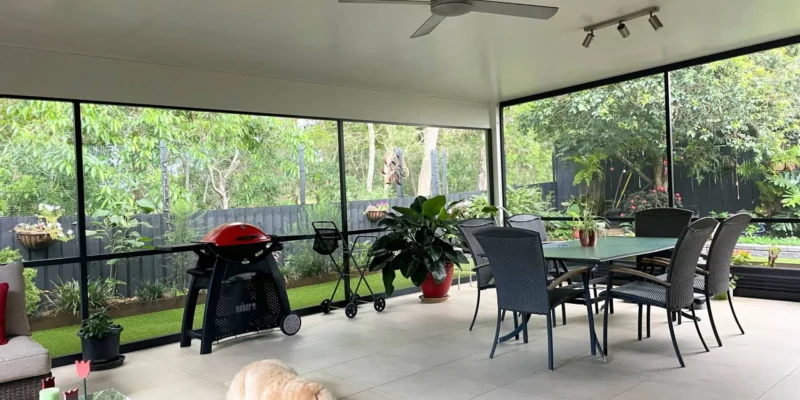
Enclose an outdoor area with screens to create a porch or use glass panels for a sunroom. You can construct a fence for total privacy. Plant dense hedges or shrubs to form a natural wall. For flexible options, install retractable awnings or hang heavy outdoor curtains to define the space.
You can screen in a patio, sure. Or use glass for a sunroom. Fences offer privacy, and hedges are a natural way to do it. For something less permanent, there are always retractable awnings or even heavy outdoor curtains. But that’s the ten-thousand-foot view. The reality of transforming an open deck or patio into a truly functional, enclosed area is a far more involved process.
What you’re really doing is expanding the livable footprint of your home. You’re creating a buffer zone, a protected environment where you can enjoy the outdoors without dealing with bugs, bad weather, or blistering sun. The decision on how to get there involves a serious look at materials, what your existing structure can actually support, your budget, and the climate you live in. There’s a huge spectrum of options, from a basic screen system to a fully climate-controlled four-season room that’s basically a home addition. This guide is designed to walk you through the methodologies, the materials science, and the critical thinking needed to plan and execute one of these projects correctly.
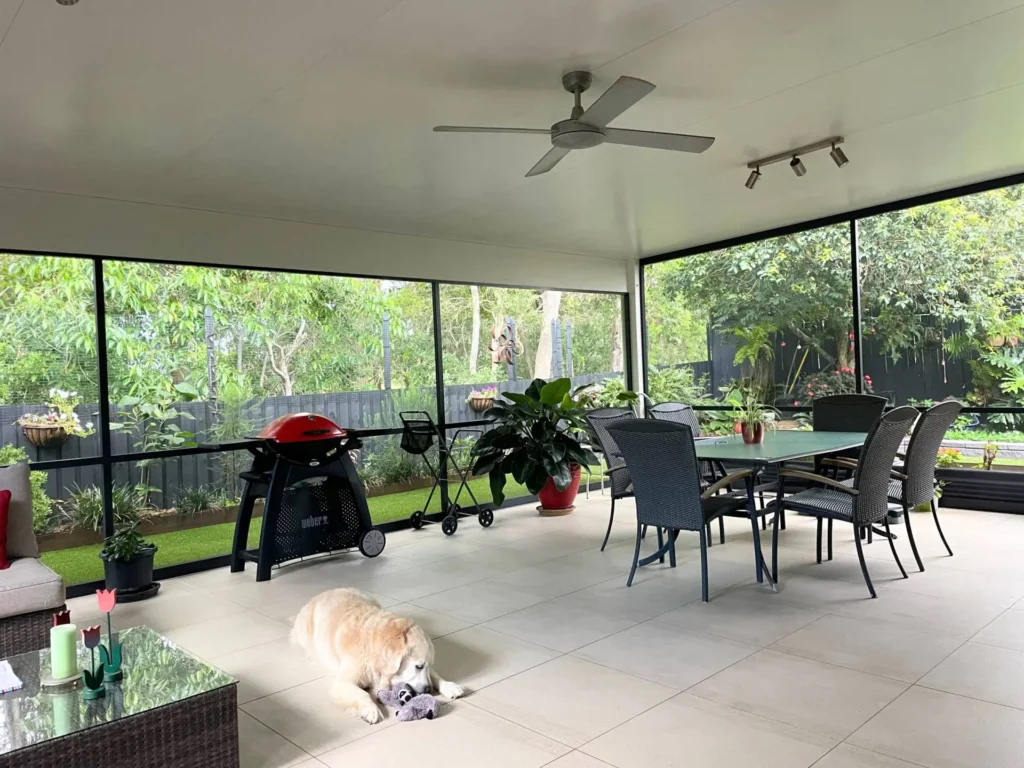
Image source: https://www.apollopatios.com.au/patio-enclosure-options/
First Principles: What Exactly is an “Enclosed Patio”?
Fundamentally, an enclosed patio is a structure that turns an outdoor area, a deck, porch, or concrete slab, into a protected, usable room. It’s the architectural bridge between your living room and your backyard. Unlike an open patio that’s at the mercy of the elements, an enclosed space has walls (or screens, or windows) and a solid roof.
This isn’t just a minor tweak; it fundamentally alters how you interact with your property, potentially turning a spot you use three months a year into a year-round extension of your home. The level of “enclosure” is the key variable, ranging from a simple screen room that just keeps the mosquitoes out to a fully insulated sunroom that’s as comfortable as any other room in the house.
Defining the Space
At its heart, the goal is to create a controlled environment. You want the good parts of being outdoors, the light, the views, without the bad parts. The definition really hinges on having some kind of permanent or semi-permanent vertical barrier.
Key characteristics that really define it:
- A Solid Roof Structure: This is your primary shield from sun and rain. No getting around this.
- The perimeter walls or panels… this is where the variation comes in. Could be screen, vinyl, or full-on glass.
- Controlled Access: It needs doors, connecting it to the house and the yard.
- Architectural integration. A tacked-on box looks like a tacked-on box. The design has to feel like it belongs to the rest of the house.
This new space isn’t just a deck, but it’s not quite an interior room, either. It’s its own category of living space, and the materials you choose will dictate how much protection it offers and when you can actually use it.
Functional Classifications: More Than Just a “Sunroom”
The term “enclosed patio” gets thrown around a lot, but in practice, it covers several distinct types of structures. Knowing the difference is the first step. The choice really boils down to your climate, how you plan to use the space, and what you’re willing to spend.
- Screen Room / Screened Porch: This is the entry-level option. It’s all about airflow and views while keeping bugs out. It provides some shade and protection from a light drizzle, but it does nothing for temperature. A great, cost-effective choice for moderate climates.
- Three-Season Sunroom: A big leap from a screen room. Here you’re using single-pane glass or, more commonly these days, vinyl panel windows. This gives you real protection from rain, wind, and pollen, stretching its usability from spring through fall. But, and this is a big but, it has zero insulation. It’s not meant for the dead of winter.
- Four-Season Sunroom: This is a true home extension. The engineering is completely different. We’re talking thermally engineered frames (with thermal breaks to stop heat transfer) and double-pane, insulated glass units (IGUs) with fancy Low-E coatings. This type of room is fully insulated and can be tied into your home’s HVAC, making it livable 365 days a year.
- Solarium: A highly specialized version of a sunroom with a glass roof as well as glass walls. They look incredible and are amazing for growing plants, but they require very high-performance glass to manage solar heat gain, or you’ll have a beautiful oven in the summer.
- Lanai: You hear this term a lot in places like Florida. It’s basically a ground-level patio under the home’s main roofline, enclosed with screens. Functionally, it’s a screen room, but it feels more integrated because it was part of the home’s original design.
Key Architectural and Structural Gotchas
This is where people get into trouble. Enclosing a patio is a real construction project, not a weekend DIY affair. You can’t just stick some walls on an old concrete slab and call it a day, because that slab was probably never designed to carry the weight—what we call the ‘dead load’—of a full roof and wall system.
A few things to obsess over:
- Foundation Integrity: A four-season sunroom is heavy. The double-pane glass and insulated roof require a serious foundation, usually a monolithic concrete slab with frost-proof footings in colder climates. That existing 4-inch slab? It needs to be professionally assessed. A deck? It almost certainly needs more posts and bigger footings to handle the load.
- Roof Design and Load: The new roof has to be engineered for your local snow and wind loads. This is non-negotiable. Whether it’s a single-slope “shed” roof or a gabled “A-frame,” the connection point to the house is a critical failure point. Improper flashing here means you’re funneling water directly into your house. A nightmare scenario.
- Wall System Integration: The new walls have to be securely anchored to the foundation and the existing house. This connection provides stability and creates the weather-tight seal.
- Building Codes and Permits: Most of these projects, and all sunrooms, are considered home additions and require building permits. Don’t skip this. The permit process is what forces you and your contractor to prove the design is safe and meets code for structural, electrical, and energy efficiency. Failing to get a permit can lead to fines, a tear-down order, and a massive headache when you try to sell the house.
The Real Payoff: Core Benefits of a Screened Enclosure
A screened enclosure is often the most popular and practical solution. It hits a sweet spot of cost and function. By stretching a high-quality screen across a sturdy frame, you create a space that feels open but is protected from the worst outdoor annoyances.
Enhanced Protection from the Elements
This is the most obvious win. It’s a barrier.
- Insect Control: No more mosquitoes. This alone is worth the price of admission in many climates.
- Debris Management: Forget sweeping leaves and pollen off the patio furniture every day. The screens catch most of it.
- UV Reduction: This is an underrated benefit. You can get specialized solar screens that block up to 90% of harmful UV rays. This protects you, and it stops your outdoor furniture from fading and degrading.
- Mild Weather Shield: It can take the edge off a stiff breeze or a light misting rain, making the space usable in marginal weather.
More Livable Space, Less Cost
You’re essentially adding a new room to your house for a fraction of what a conventional, stick-built addition would cost. This new room becomes a flexible, transitional zone. It can be your outdoor dining room, a safe play area for the kids, or just a quiet place for a morning coffee. You’re maximizing the utility of your property.
Increased Home Value and Curb Appeal
A professionally installed screened patio is a feature that buyers love. It screams “lifestyle.” It adds to the functional square footage and signals that the home is well-maintained. In many markets, you’ll see a significant return on your investment when you sell. Beyond the money, it just looks good. It adds structure and a finished look to the back of a house.
Preserving the Outdoor Experience
Here’s the key distinction between a screen room and a sunroom. Screens protect you without isolating you. You still get the breezes, the sounds of birds, and an unobstructed view of your yard. Modern high-visibility screens are designed to be almost invisible from a few feet away. For people who want to feel like they’re outside without the downsides… this is the perfect compromise. It’s the best of both worlds.
Options For Materials and Systems
The choice of materials is the single most important technical decision you’ll make. It dictates durability, maintenance, thermal performance, and cost. Let’s break down the core components.
The Skeleton: A Comparative Analysis of Framework Materials
The frame holds everything together. It has to be strong and stand up to whatever your climate throws at it.
Aluminum Frame Systems
Extruded aluminum is the industry standard for a reason. It’s incredibly strong for its weight and requires almost no maintenance.
- The Material Itself: We’re talking about architectural aluminum alloy. It’s engineered for structural integrity and corrosion resistance.
- The Finish is Everything: Raw aluminum oxidizes. So, these systems come with a factory-applied finish, usually a powder coat or baked-on enamel that conforms to Australian standards (look for AS/NZS 1866 or variations). This finish is the armor.
- Smart Design: The extruded profiles are not solid; they have internal webbing for strength and channels for screws, making assembly clean and strong. For four-season rooms, they incorporate “thermal breaks”—a strip of non-conductive polymer that physically separates the inside and outside aluminum surfaces. Without this, the frame would be a thermal bridge, conducting cold straight into the room and causing condensation.
- Maintenance: Hose it down. That’s about it. It won’t rot, warp, or get eaten by termites.
Wood and Timber Frames
Wood has a classic look that aluminum can’t always match. But it comes with a maintenance commitment.
- Wood Species Matters: Pressure-treated pine is the budget option. For looks and natural rot resistance, you’d step up to cedar, redwood, or Douglas fir. For really long spans, you might need engineered lumber like LVL or glulam beams.
- Protection is Mandatory: Wood needs to be sealed, stained, or painted. And this isn’t a one-and-done job. You’ll be re-applying that finish every few years to protect it from moisture and UV damage.
- Structural Notes: Wood is heavy. It may require a more substantial foundation than a lightweight aluminum system.
Vinyl and Composite Framing
Vinyl (PVC) and composites are the newer players, offering a low-maintenance alternative with great thermal properties.
- The Science: Vinyl frames are natural insulators, they don’t conduct heat or cold well at all. This makes them a fantastic choice for sunrooms. They are often built with hollow, multi-chambered profiles for added strength and insulation.
- Durability: Like aluminum, vinyl is impervious to rot and insects. The color is integral, so it can’t scratch off.
- Limitations: Vinyl isn’t as rigid as aluminum. For large window openings or in high-wind areas, vinyl frames often need internal steel or aluminum reinforcement to keep them from flexing.
The “Walls”: From Screens to High-Performance Glass
The infill material defines what the room is.
- Screen Materials:
- Fiberglass Screen: The standard. It’s cheap, flexible, and easy to work with. Charcoal is the most popular color because your eye looks right through it.
- Aluminum Screen: Stiffer and a bit more durable than fiberglass.
- Pet-Resistant Screen: This is a vinyl-coated polyester mesh that’s about seven times stronger than standard fiberglass. If you have dogs or cats with claws, this is a must.
- Solar Screen: A specialized mesh that blocks a huge percentage of solar heat gain. A game-changer in hot, sunny climates, though it does darken the room slightly.
- Vinyl Panel Systems: You might hear this called “memory vinyl.” It’s a tough, flexible PVC film in a window frame. If it gets pushed or dented, the sun’s warmth makes it shrink back to its original shape. It’s a great three-season option that’s cheaper and lighter than glass.
- Glass Systems (Single-Pane): The baseline for a three-season sunroom. It’s usually 1/8-inch tempered safety glass (which is required by code in doors and near the floor). It stops the wind and rain perfectly but has terrible insulating properties (think of an old window in a cabin).
- Glass Systems (Double-Pane Insulated): This is what makes a four-season room possible. An Insulated Glass Unit (IGU) is two panes of glass hermetically sealed with a spacer, trapping air or an inert gas like Argon in between.
- Low-E Coatings: The magic ingredient. A microscopically thin metallic coating is applied to one of the glass surfaces inside the IGU. It reflects infrared heat—keeping heat in during the winter and out during the summer.
- Performance Metrics: The two numbers to care about are the U-factor (how well it prevents heat loss; lower is better) and the Solar Heat Gain Coefficient or SHGC (how much solar heat it lets through; lower is better in hot climates).
The Roof: Your Primary Shield
The roof does more than keep the rain out; it’s a huge part of the room’s thermal performance.
- Solid Insulated Roof Panels: The best and most common choice for sunrooms. These are Structural Insulated Panels (SIPs), which are a core of foam insulation (usually EPS) sandwiched between two skins of aluminum. They are strong, lightweight, provide excellent insulation (R-15 to R-30+), and often have built-in channels for running electrical wiring for lights and fans.
- Polycarbonate Roofing: A translucent plastic that lets in diffused natural light. It’s great for patio covers but less common for full sunrooms. Look for “multiwall” polycarbonate, which has internal chambers that give it better insulating properties than a solid sheet.
- Tying into the Existing Roofline: This is the most architecturally seamless option, but also the most complex and expensive. It involves building a conventional stick-framed roof and matching your home’s existing shingles. The flashing and waterproofing work at the connection point has to be absolutely perfect. This is a job for a very good roofer, not just a sunroom installer.
Comparison of Patio & Outdoor Area Enclosure Methods
This table is a rough guide. Costs are highly variable based on location, contractor, and the specifics of your site. But it gives you a starting point for thinking about budget and performance.
| Enclosure Method | Typical Cost (AUD per sq. m.) | Protection from Weather & Elements | Key Benefits for Homeowners | Material & Space Considerations |
|---|---|---|---|---|
| Screen Enclosure | $8 – $20 | Great for bugs; some protection from sun/wind. Rain will get in. | The most affordable way to make a space more usable. Keeps the outdoor feel. | Aluminum or wood frames. Perfect for moderate climates where temperature isn’t the main issue. |
| Vinyl Panel Windows | $15 – $35 | Good protection from rain, wind, pollen. Some UV blocking. | Flexible three-season use. Lighter and often cheaper than glass. | “Memory vinyl” is tough but not as clear as glass and can scratch. A solid mid-range option. |
| 3-Season Sunroom | $100 – $300 | Excellent protection from everything except the cold. | Adds significant living space and value (ROI can be around 50%). Great for entertaining. | Single-pane glass and non-thermally broken frames. Not meant for winter use in cold climates. |
| 4-Season Sunroom | $200 – $400+ | Total, year-round protection. A true extension of your home. | A fully climate-controlled room that maximizes your home’s value and usability. | This is a major construction project requiring double-pane insulated glass, thermal breaks, and a proper foundation. |
| Motorized Screens | $40 – $100 | On-demand protection from bugs, sun, and light rain. | The ultimate in flexibility. An open patio when you want it, a screen room when you need it. | The hardware is more complex. High-end screens offer excellent UV blocking. |
| Australian ‘Alfresco’ | $70 – $200+ | Specifically engineered to handle intense sun, wind, and insects. | Creates that seamless indoor-outdoor flow that’s central to the Australian lifestyle. | Often uses specialized systems like Ziptrak® blinds or aluminum shutters designed for that climate. |
Sources: Data compiled from Forbes Home, HomeAdvisor, Remodeling’s Cost vs. Value Report, and Australian outdoor living specialists.
Planning Your Project
A good outcome is the result of a good plan. Winging it is a recipe for disaster.
Phase 1: Assessment and Goal Setting
First, you need to understand the problem you’re trying to solve.
- Define Primary Use: What is this room for? A dining area? A playroom? A home office? This drives decisions about everything from electrical outlets to door placement.
- Analyze Your Climate: What are you fighting? Intense afternoon sun? Bugs? Wind? Frequent rain? The answer points you toward the right type of enclosure.
- Evaluate the Existing Structure: Be brutally honest about your current deck or patio. Is the concrete cracked? Is the deck wobbly? Can it support a roof? Better to know now.
- Set a Real Budget: Figure out what you can realistically spend, and then add 15% for a contingency fund. Something always comes up.
Phase 2: Design and Material Selection
Now you translate your goals into a concrete plan.
- Choose the Enclosure Type: Based on Phase 1, decide if you need a screen room, a three-season, or a four-season room.
- Select Materials: This is where you decide on aluminum vs. wood, screens vs. glass. Your climate and budget are the main drivers here.
- Aesthetics: How will it look? It needs to complement your home’s existing style, color, and roofline. Don’t let it look like a cheap attachment.
Phase 3: Permits and Codes (The Boring But Critical Part)
Do not skip this phase.
- Check Local Zoning: Your town has rules about setbacks (how close to the property line you can build) and lot coverage. Find out what they are before you design anything.
- Get Council Approval: Almost any structure with a roof requires a building permit. Your contractor should handle this, but it’s your responsibility to make sure it happens. The permit application will require detailed plans showing that the structure is designed to be safe and code-compliant.
Phase 4: Contractor Selection and Execution
The person you hire will make or break this project.
- Vet Your Candidates: Get at least three bids. Look for contractors who specialize in these structures. Check their license and insurance (both liability and worker’s comp). Ask for references and actually call them.
- Compare Detailed Bids: A real bid breaks down costs for materials, labor, and permits. A price on a napkin is a red flag. Be suspicious of a bid that’s dramatically lower than the others; they’re cutting corners somewhere.
- Sign a Comprehensive Contract: The contract should detail the scope of work, materials to be used, payment schedule, and a timeline. Get everything in writing.
Maintenance and Longevity
You’ve invested in this space; now you have to protect it. Routine maintenance is key.
- Screens: Wash them gently with soap and water and a soft brush. High pressure from a hose can damage the mesh. Keep an eye on the rubber spline that holds the screen in; if it gets brittle, replace it.
- Glass/Vinyl: Use the right cleaners. Ammonia-free for glass, and something specifically for vinyl so you don’t scratch it. Vacuum the window tracks regularly to keep them sliding smoothly. A little silicone spray on the rollers once a year works wonders.
- Frame: Wash it. Inspect it for deep scratches in the finish that could lead to corrosion. Check the sealant joints and re-caulk any that are cracked or pulling away to keep it watertight.
- Leaks: Water leaks are an emergency. Find the source immediately. It’s often failed sealant or a problem with the flashing where the roof meets the house. Fix it fast.
What’s Next: Trends and Innovations
This space is always evolving. The future is about smarter, more flexible enclosures.
- Smart Home Integration: We’re moving beyond simple remotes. Think motorized screens tied to a wind sensor that automatically retract in a storm, or that lower on the west side of the house when a smart thermostat detects high heat gain.
- Advances in Glass: Dynamic or “smart” glass that can tint on demand is getting more affordable. It eliminates the need for blinds. Self-cleaning coatings that use UV light and rain to wash away dirt are also becoming more common.
- Flexibility is King: The biggest trend is the desire for convertible spaces. Systems of folding or sliding glass walls (like NanaWall) can completely disappear, erasing the line between inside and out. This gives you the protection of a sunroom with the openness of a patio, all in one.
Common Questions (FAQs)
View common questions we get asked about this topic.
What’s the best way to enclose a patio for the Australian climate but keep the views?
In the Aussie climate, you’re fighting intense sun, insects, and sometimes heavy rain. For an unobstructed view, the top contenders are either large glass panels (if you’re creating a sunroom) or a track-guided blind system using clear PVC. A lot of people also opt for high-visibility “alfresco” screens paired with motorized solar blinds. This gives you a hybrid solution: the screens handle the bugs 24/7, and the blinds can be deployed to manage the harsh sun when needed, then retracted to open up the view.
How does a sunroom really add value beyond just more space?
It adds functional value, which is what buyers pay for. A sunroom transforms a home’s relationship with its property. It creates a comfortable, all-weather space for relaxing and entertaining that feels connected to the outdoors. It’s a huge lifestyle upgrade. From a resale perspective, it increases the perceived and actual square footage and boosts curb (or backyard) appeal. It becomes a major selling feature that distinguishes your house from others on the market.
To protect my patio from both sun and rain, are screens enough?
No. Screens are fantastic for insects and for cutting down on direct sun (especially solar screens), but they won’t stop rain. A light mist might be deflected, but any real precipitation is coming through. For true all-weather protection from sun and rain, you need a solid covering. That means a solid roof combined with either vinyl panel windows or, for a more permanent solution, a proper glass sunroom. Screens solve the bug problem; solid panels solve the weather problem.